
Use the conservancy’s art map to plan a focused walk through Atlanta’s linear park. |
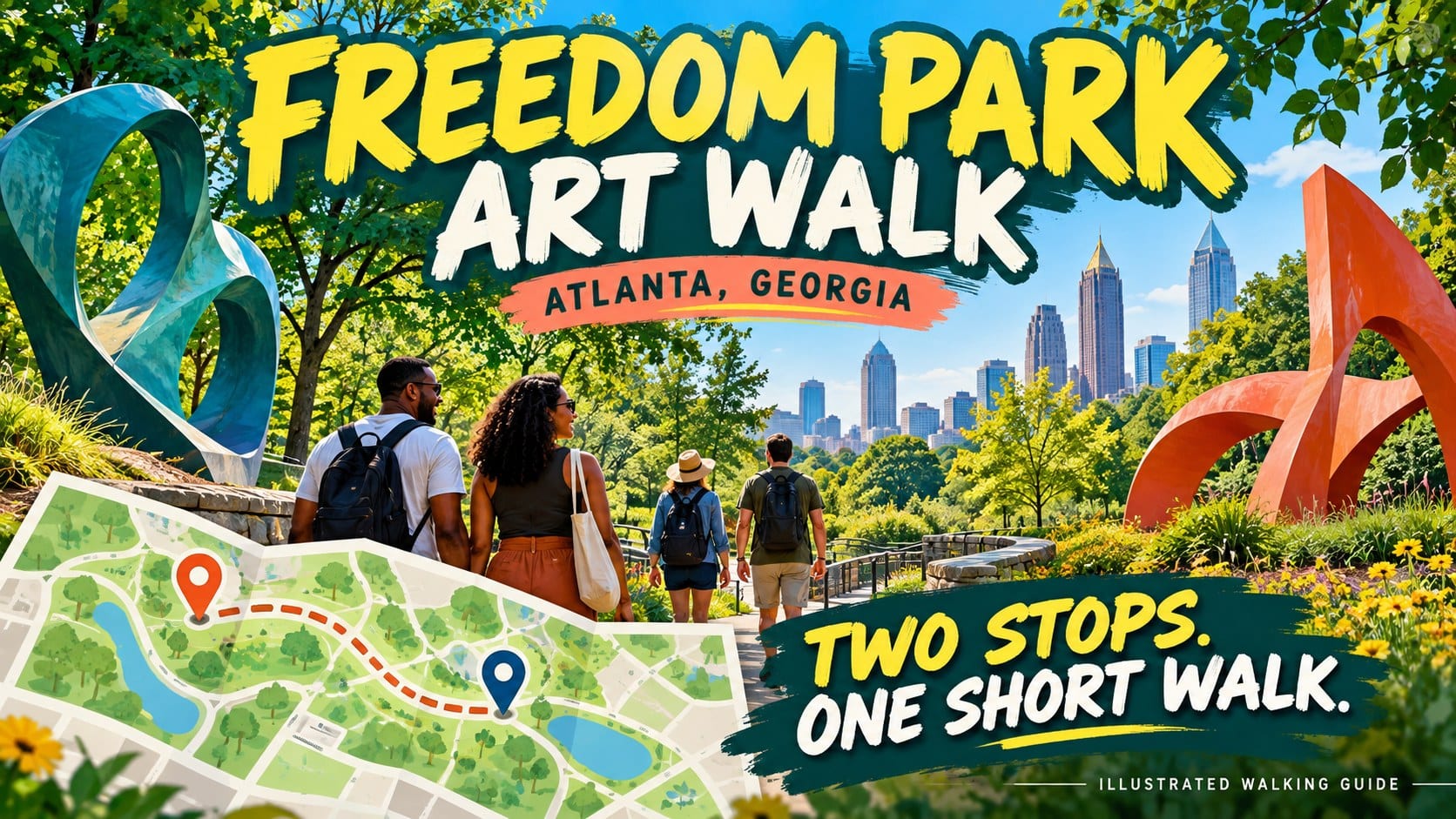
Freedom Park Art Walk: Choose a Short Route Before You GoChoose two art stops, not the entire parkA Freedom Park art walk works best when you decide what you want to see before setting out. The Freedom Park Conservancy overview describes a large linear park with paths linking seven intown neighborhoods. That network offers possibilities, but it is more than a single compact sculpture garden with one obvious front entrance.
Start with the Art in Your Park page, which provides a downloadable art map and separates permanent, temporary and past projects. Pick one or two works that interest you, locate them on the map and choose a nearby starting point. Do not assume that a project listed as past remains available today.
Build an outing around the group’s actual walking comfort. Set a turnaround time, identify where you will meet and make the return route as clear as the outward route. The park’s overall trail mileage does not establish the length of the walk between your selected stops.
Check current conditions and access arrangements before leaving. The conservancy homepage describes a campaign to improve wayfinding, which is a useful reason to prepare your own route rather than depending on new signs already being installed. Download or save the relevant information while you have a reliable connection. |
 Illustrative garden setting; not Freedom Park or a named installation. Photo by jorginho Dj on Pexels |
Look closely without guessing at the artist’s intentionPublic art invites a different pace from a destination-to-destination walk. Stand where you can view a work without obstructing others, and notice scale, material, outline and the surrounding space. Ask what changes when you see the same piece from another permitted viewing position.
For one example, the city’s Homage to King entry identifies a 1996 steel sculpture by Xavier Medina-Campeny and explains its connection to an Olympic cultural exchange with Barcelona. Read the description before adding your own interpretation. Use the conservancy’s map to plan its location, since the city entry includes differing location text.
With children, try asking about a shape, a gesture or a detail they can point out. There is no need to demand a complete explanation of the artwork. Adults can compare their observations with the accompanying description and distinguish what they notice from what the artist or commissioning organization states.
Temporary works and outdoor surroundings can change. A photograph taken previously is not a guarantee of today’s installation or conditions. Follow posted instructions, avoid climbing or touching art unless explicitly permitted, and leave enough space for other visitors to have their own encounter.
After the second stop, pause and compare what everyone remembers. A focused conversation can make a short walk worthwhile without adding distant works simply to increase the number of stops. Keep the return plan in view as attention shifts to the art. |
 Illustrative outdoor walk; not Freedom Park’s paths. Photo by Ron Lach on Pexels |
Share the paths and plan the returnThe conservancy describes paths used for walking, jogging and cycling. Stay attentive to other users, keep the group from spreading across the entire route and move aside for a discussion or photograph. Stop before consulting a map instead of reading while moving through a busy section.
Road crossings deserve a separate check. Choose marked crossings, follow signals and keep children close. A greenway connection between neighborhoods does not mean every junction is traffic-free. If a segment or crossing feels unsuitable for the group, shorten the route rather than forcing the original plan.
Our Piedmont Park playground guide offers a different family park outing, while the Jimmy Carter Museum guide helps plan a separate indoor history visit. Facts were checked October 7, 2026. Recheck the art map and conditions, bring water and comfortable footwear, and leave with time for an unhurried return to the meeting point.
For more local outing ideas, explore our guide to things to do in Atlanta, GA. |
0 Comments
Join the conversation
Be the first to comment
Share your thoughts above.